Marine High–Resolution Seismic Data Processing
RadExPro seismic software offers versatile capabilities for both single-channel and multi-channel HR/UHR marine seismic processing, supporting both 2D and 3D data. It seamlessly accommodates various marine sources, including airgun, sparker, and boomer, among others.
With a comprehensive suite of features, RadExPro empowers users to enhance their seismic data processing significantly. It includes deblending, advanced denoising, high-resolution offshore statics, automatic wavelet estimation, adaptive deghosting, debubbling, various deconvolutions, Q-compensation, efficient demultiple algorithms for multi-channel data (SRME), and even single-channel data (Zero-Offset Multiple Attenuation), 3D regularization, pre-stack, and post-stack migrations, diffraction imaging tools and more.
RadExPro stands out for its exceptional flexibility, allowing experienced processors to easily implement sophisticated processing scenarios within its modern and user-friendly interface. Remarkably, all of these capabilities come at a fraction of the cost compared to larger seismic processing systems available on the market.
Leveraging replica tables and replicated flows streamlines production mode processing. You can now effortlessly route numerous seismic lines through the same flows with predefined yet customizable processing parameters, automating the process to eliminate human errors and dramatically slash processing times.
Outstanding Results of Marine High–Resolution Seismic Data Processing in RadExPro
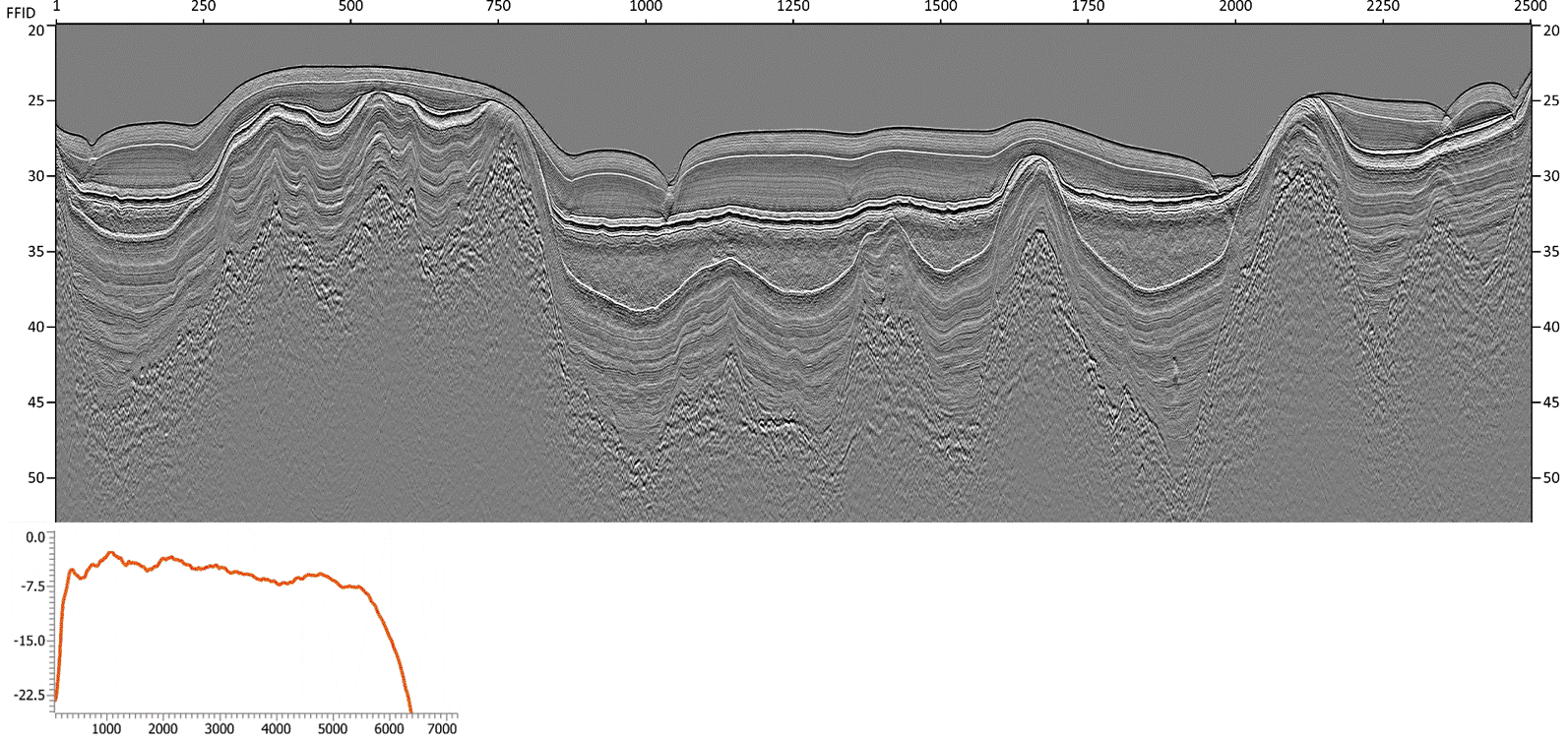
Processed Ultra–High Resolution seismic section and its frequency spectrum.
(Source: Boomer; Water depths: 18-25 m; Vertical scale: TWT, ms; Vertical resolution: <1 m)
3D regularization is dedicated for interpolating UHR 3D seismic data by common offsets on a regular grid. Algorithm is based on wavefield reconstruction in F–Kx–Ky domain.
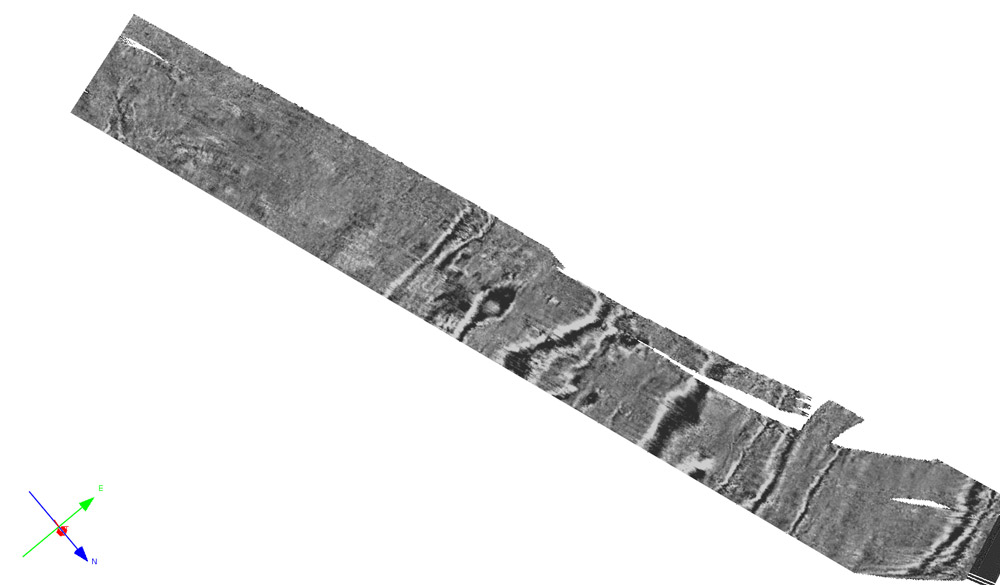
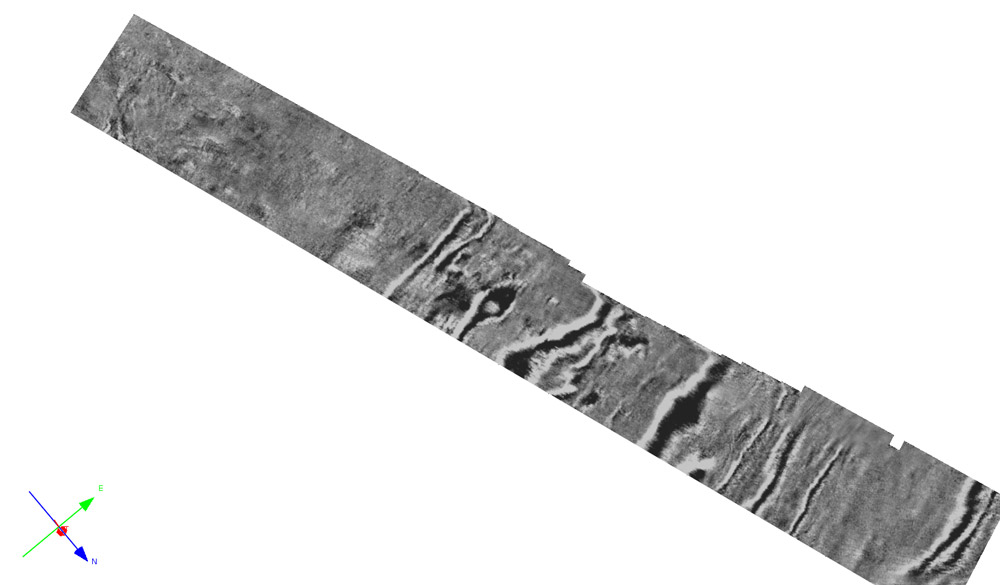
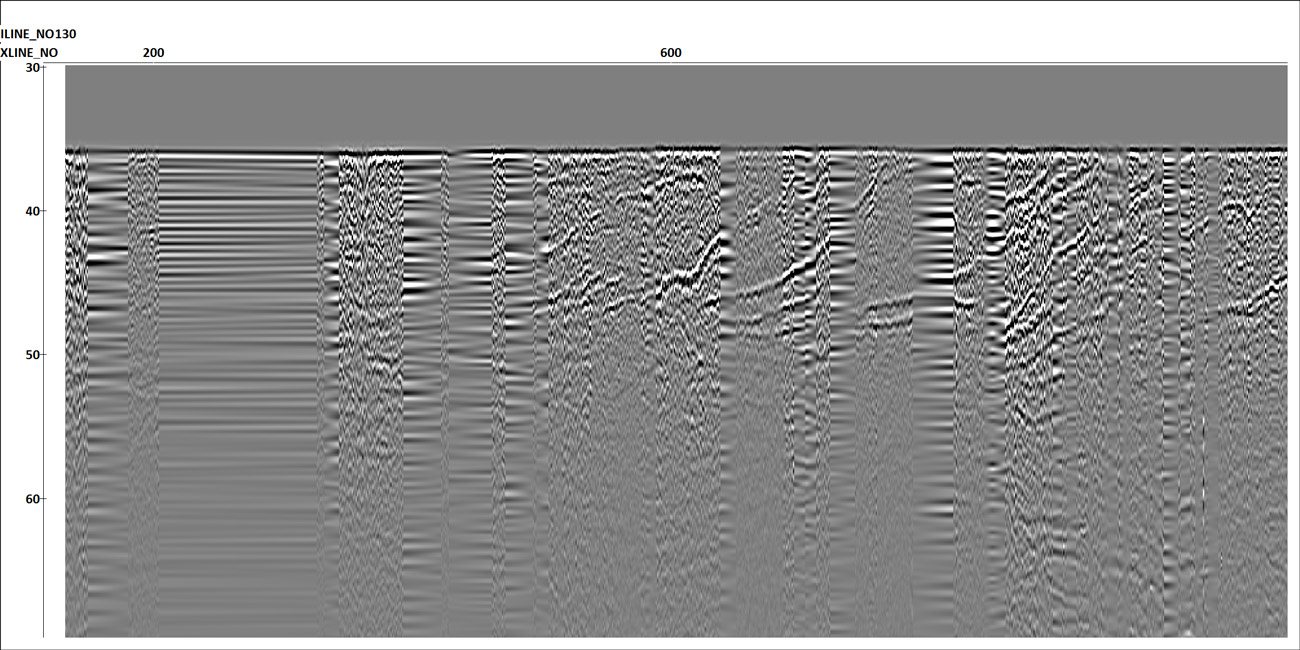
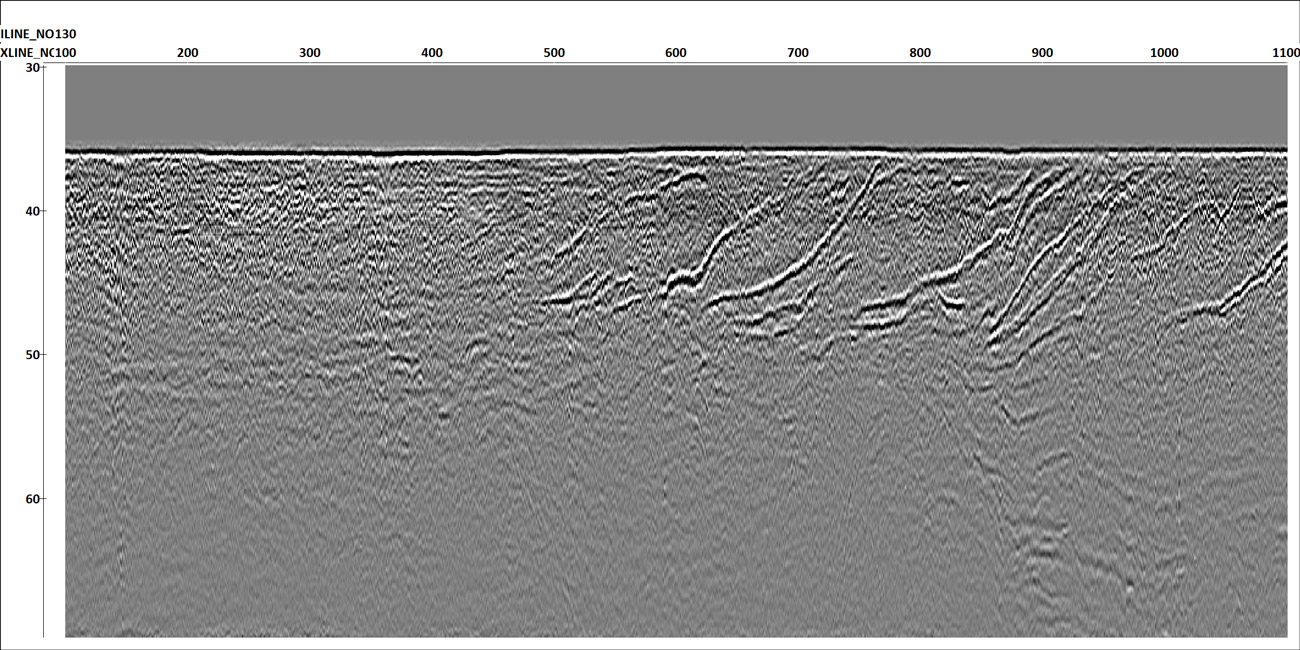
Ultra-High Resolution 3D seismic data before and after 3D Regularization are shown below.
Data courtesy of Ørsted, pre-stack processing in RadExPro by GeoSurveys.
(Source: sparker; Inline/Cross-Line spacing: 0.5 m; Vertical scale: TWT, ms)
Inline before and after regularization
Time slice before and after regularization